Why sport's biggest commercial wins may already be inside the stadiums we have.
The Untapped Potential in Your Current Venue
For many clubs, a new stadium simply isn't financially viable. Yet most grounds contain spaces built for a different era: traditional executive boxes, dated suites, underused concourses and tired function rooms.
These spaces still have value. They just aren't delivering the experience or return they could.
So instead of asking how to make a hospitality space look better, ask:
How can we make it work harder?
Hospitality Is No Longer Just Premium Seating
Stadium hospitality has traditionally been built on exclusivity: private boxes, formal dining, corporate entertaining. Those products still have a place, but the market has moved on.
Supporters now want great food and drink, atmosphere, social connection and a genuine link to their club. For some, that's a premium restaurant. For others, it's a relaxed sports bar, a lively social lounge or an elevated matchday that feels accessible rather than exclusive.
Clubs that offer a broader range of products, across different audiences and price points, will be the ones that grow. And most of it can be done within the footprint they already have.
Designing for Commercial Performance
At Layrd, we believe good design should deliver commercial value, not just an attractive room. That means thinking about how a space operates, how guests move through it, how food and drink are served and how it adapts to different uses.
Often, straightforward changes transform how a space performs:
- A new layout improves circulation and capacity.
- A redesigned bar speeds up service.
- Flexible furniture turns a matchday lounge into a non-matchday event space.
- A stronger identity turns a tired room into a destination.
The value isn't in creating more space. It's in getting more from the space you have.
We've Seen It First-Hand
We've worked with clubs including AFC Bournemouth, Ipswich Town, Birmingham City, Huddersfield Town, Cambridge United and Peterborough United. Different sizes, different budgets, each with its own commercial goals.
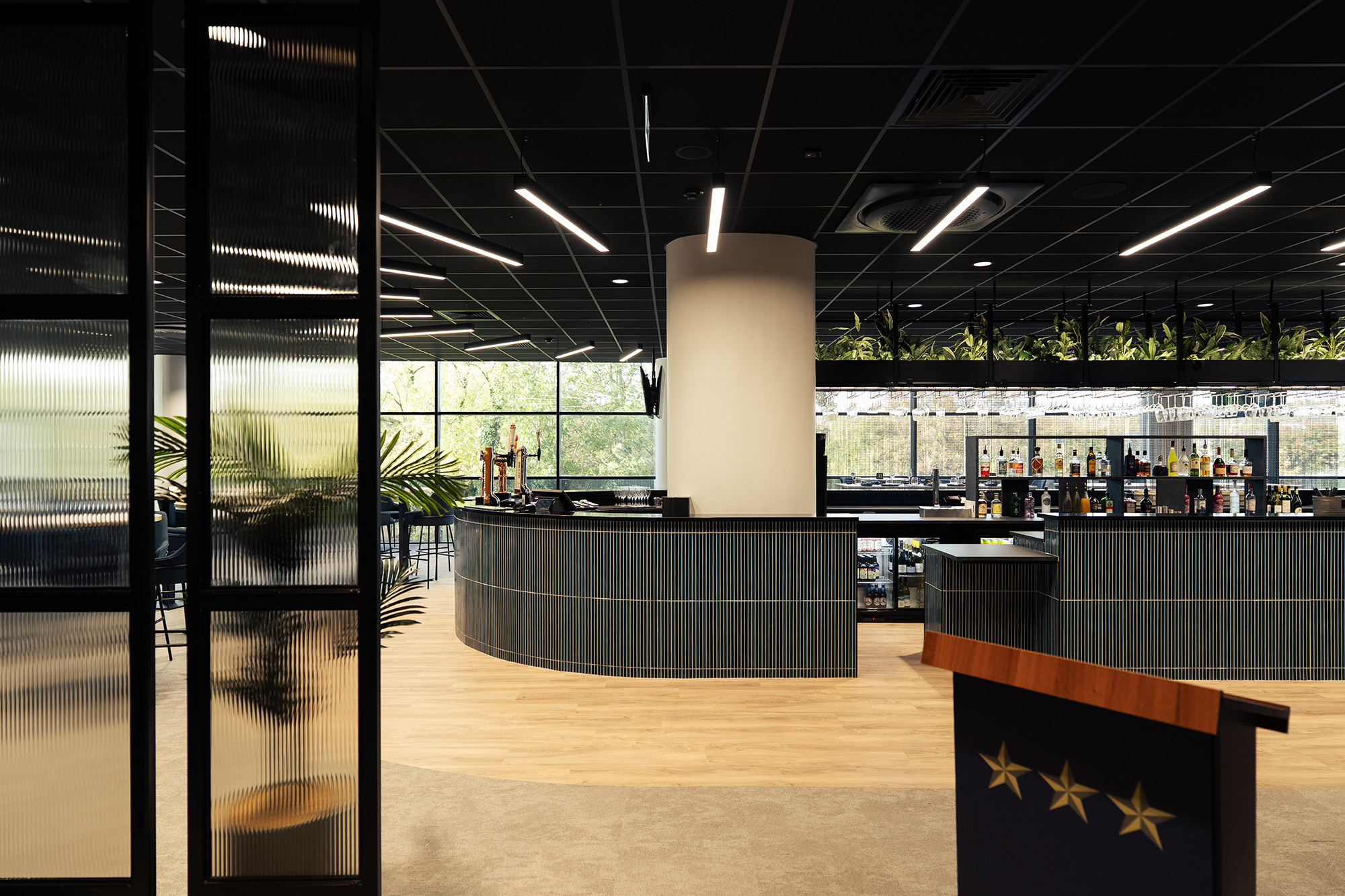
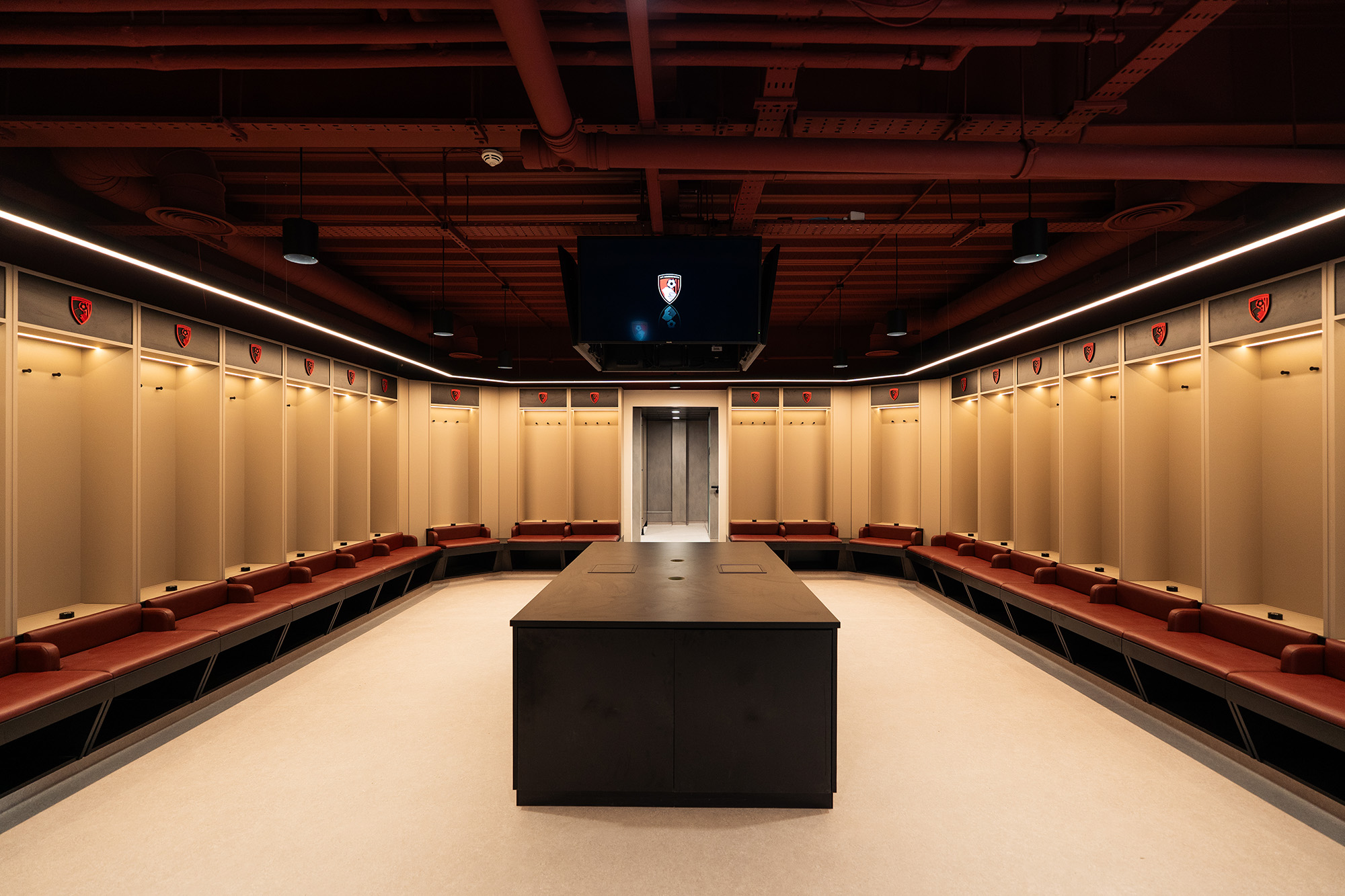
At AFC Bournemouth, we refreshed the entire East Stand hospitality offer, creating a large, experience-led space with a deeper connection to the club and the sport, and a clear alternative to the VIP lounges in the Main Stand.
At Ipswich Town, we've delivered a series of spaces, from executive boxes and GA Plus hospitality to boardrooms and VIP lounges, turning traditional hospitality into contemporary, experience-led environments. The club now has a greater share of hospitality across the stadium, plus spaces it can sell for other uses on non-matchdays.
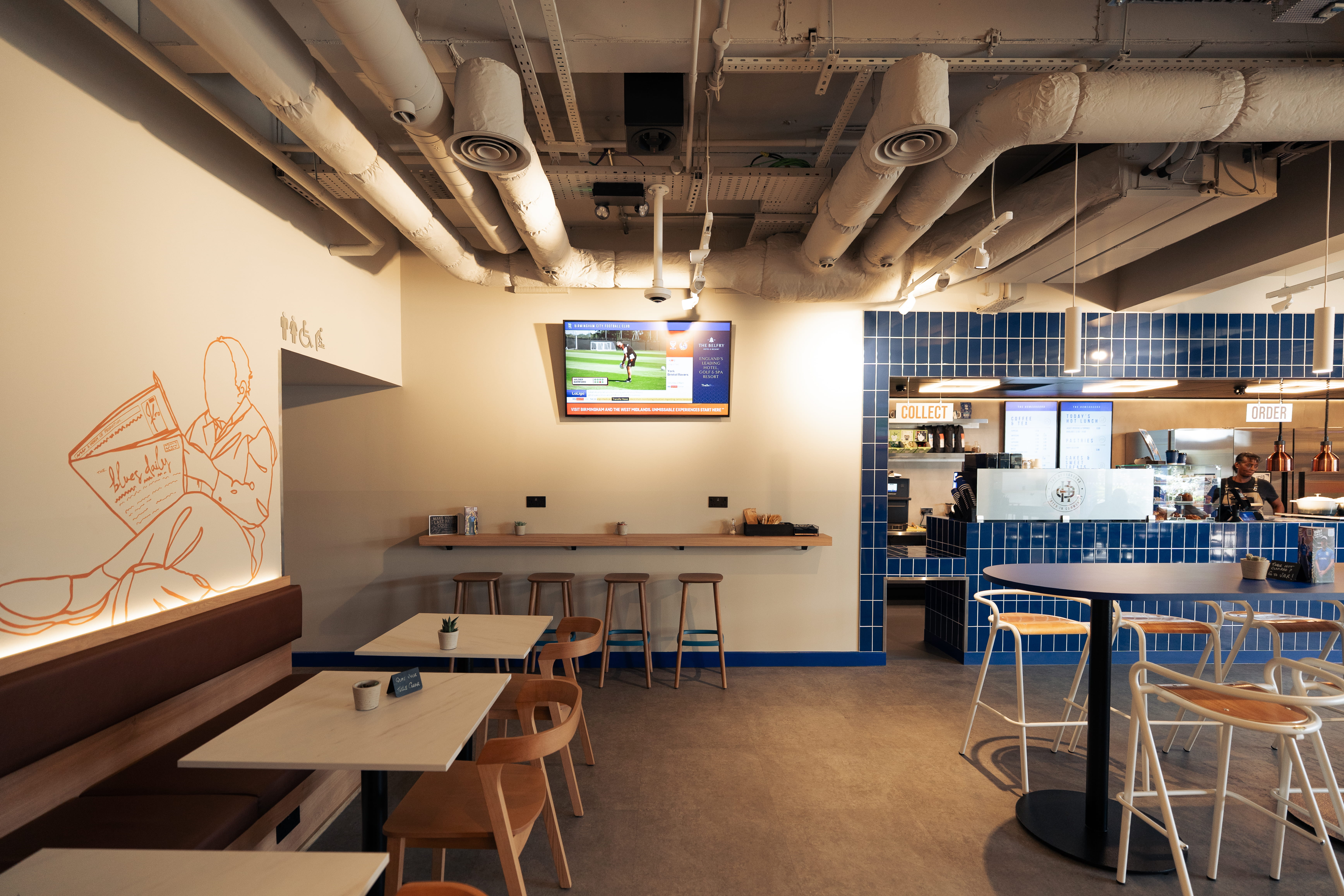
At Birmingham City, our Homeground project kept the existing building shell and gave it a new identity. It's now a social hub for staff, and it opens up to general fans on matchdays.
At Huddersfield Town, the 1908 Restaurant and Riverside Lounge gave the club two very different hospitality products under one roof. The 1908 was a completely unused space. Today it's the most sought-after space in the stadium.
At Cambridge United, the Layrd Lounge and Regent Lounge give guests a choice between a more formal and a more relaxed setting, and both have the potential to be used on non-matchdays too.
Different clubs. Different budgets. Different supporters. One consistent philosophy:
Understand the commercial opportunity first. Design the experience around it.
The Next Phase of Stadium Hospitality
I believe the next wave of investment will be as much about intelligent refurbishment as new builds. Clubs will need to look at their current assets through a different lens:
- Which spaces are underperforming?
- Which products no longer meet customer expectations?
- Where could a modest investment unlock a much stronger guest experience?
- How can facilities earn beyond the matchday?
New stadiums will always grab the headlines. But there's enormous potential in the venues that already exist.
You don't need a new stadium to deliver a new experience.
If there's a space in your ground that isn't pulling its weight, come and let us show you how you can make this work harder.