What Our Objects Say About Us
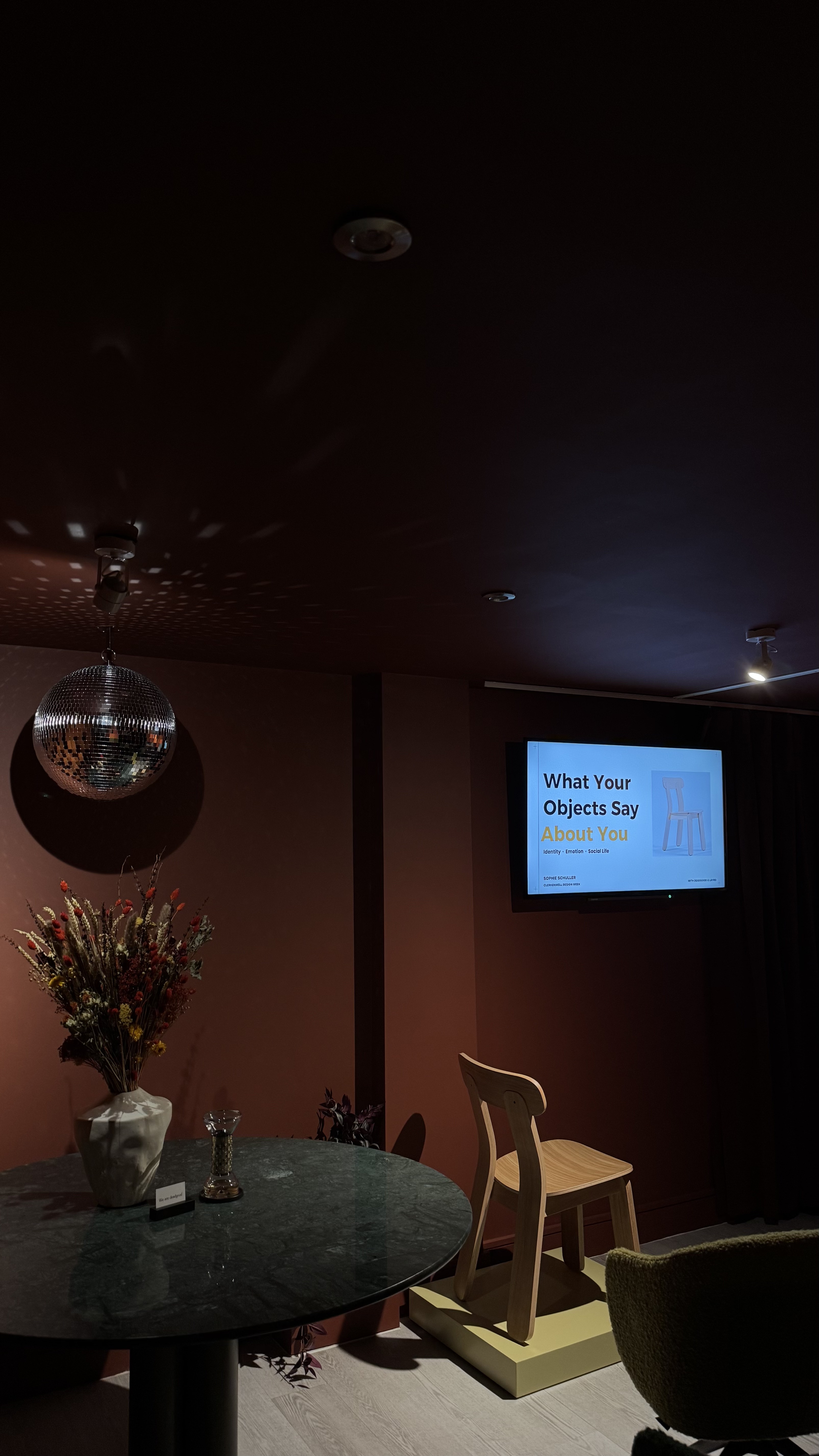
As part of Clerkenwell Design Week 2026, we decided to host our very first Layrd event, in collaboration with Deadgood and neurophysiologist Sophie Schuller.
Sophie’s talk, ‘The Meaning of Objects: How They Shape Identity, Emotion and Social Life,’ explored the relationship between identity, emotion, cognition and the spaces we inhabit. Sophie discussed the links between neuroscience, architecture, product design and human behaviour, but what made it great was how personal it felt. Everyone in the room could immediately recognise themselves in it. The favourite mug they reach for every morning, the desk they endlessly try to ‘organise,’ the chair that somehow feels comforting before you’ve even sat in it.
As Sophie explained: ‘Objects fulfil two meanings: one is functional and one is symbolic.’
The things we surround ourselves with are not simply tools. They become extensions of who we are, who we have been, and often who we aspire to become. Throughout the talk, Sophie described spaces as ‘a curation of a self-portrait.’
For us at Layrd, that idea feels incredibly important.
Design is often discussed in terms of aesthetics or functionality alone, but Sophie articulated something deeper: the emotional and physiological dialogue between people and space. The way texture, colour and materiality shape not only how we feel, but how we behave with one another.
‘We don’t just look at a chair and think, ‘that’s beautiful’. We imagine ourselves in it. We sit in it. We feel our bodies in it. The space creates affordances.’
That relationship between body, mind and environment became a thread throughout the evening. Sophie spoke about behavioural residue: the idea that our spaces quietly reveal who we really are through thousands of tiny decisions and habits. The objects on a desk. The books left open. The way chairs are positioned. Even the tension between analogue and digital life.
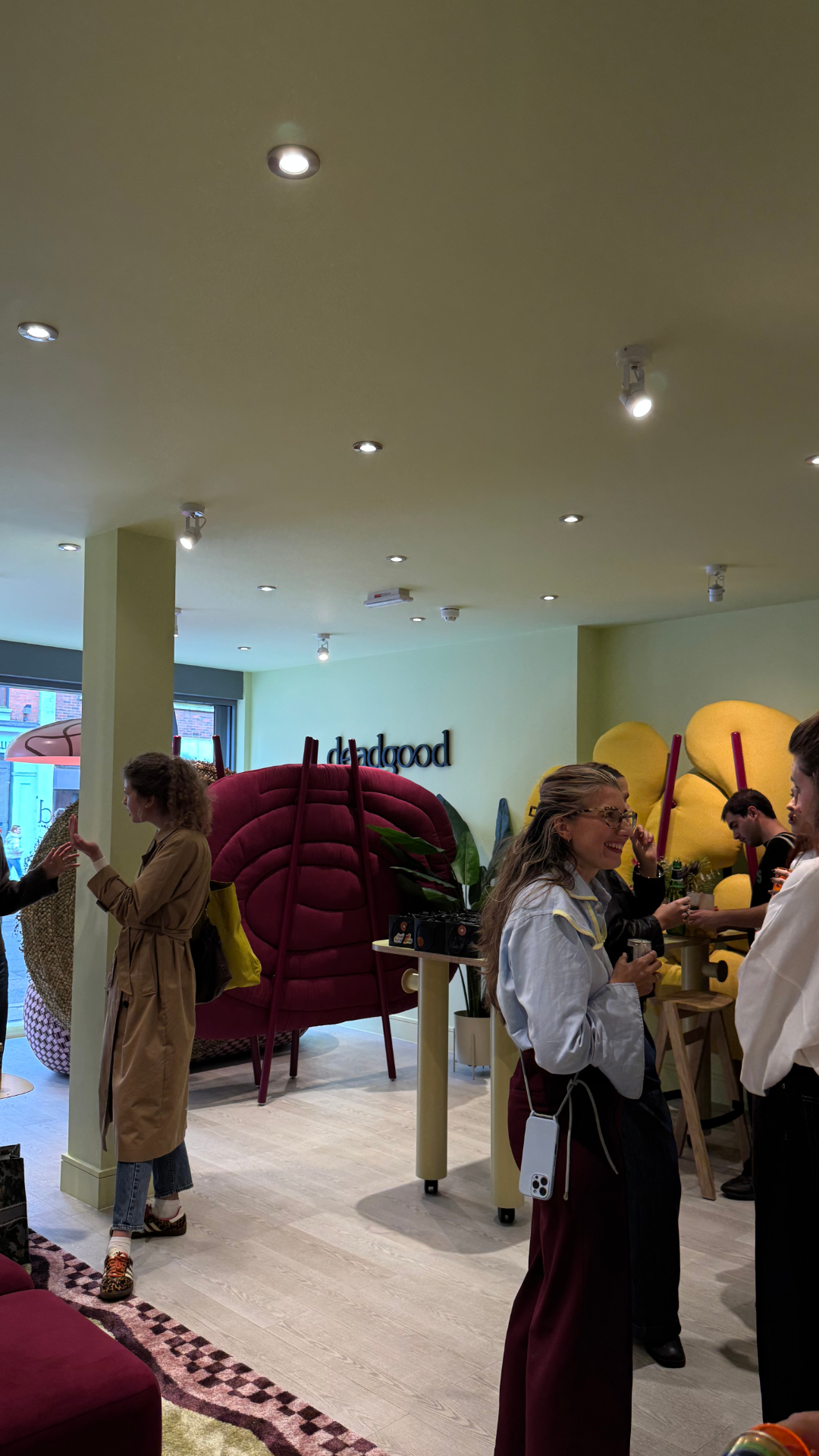
Sophie also touched on something we feel is relevant in workplace and hospitality design: the balance between individuality and community. Following years of hybrid working and highly personalised home environments, many people now experience a real emotional shift when moving between domestic and corporate spaces.
As she put it:
‘It is important to bridge the gap between where people are now and who they aspire to become.’
Good design doesn’t just reflect identity; it can gently support growth, comfort, belonging and confidence. It can help people feel more themselves.
Another highlight was Sophie’s perspective on sensory design and the body, particularly her research into posture, movement and furniture. Her challenge to conventional sitting culture sparked plenty of thoughts:
‘The next best posture is the next posture.’
It’s rare to hear someone speak about furniture not simply as an object, but as something that actively shapes cognition, emotion and even social behaviour.
Throughout the evening, Sophie continuously returned to the idea that design is fundamentally human. Not trend-led. Not superficial. Human.
“As designers, we’re not just designing spaces, we’re designing emotional identity and ways of being in the world.” This quote captures exactly why we wanted to host this event in the first place.
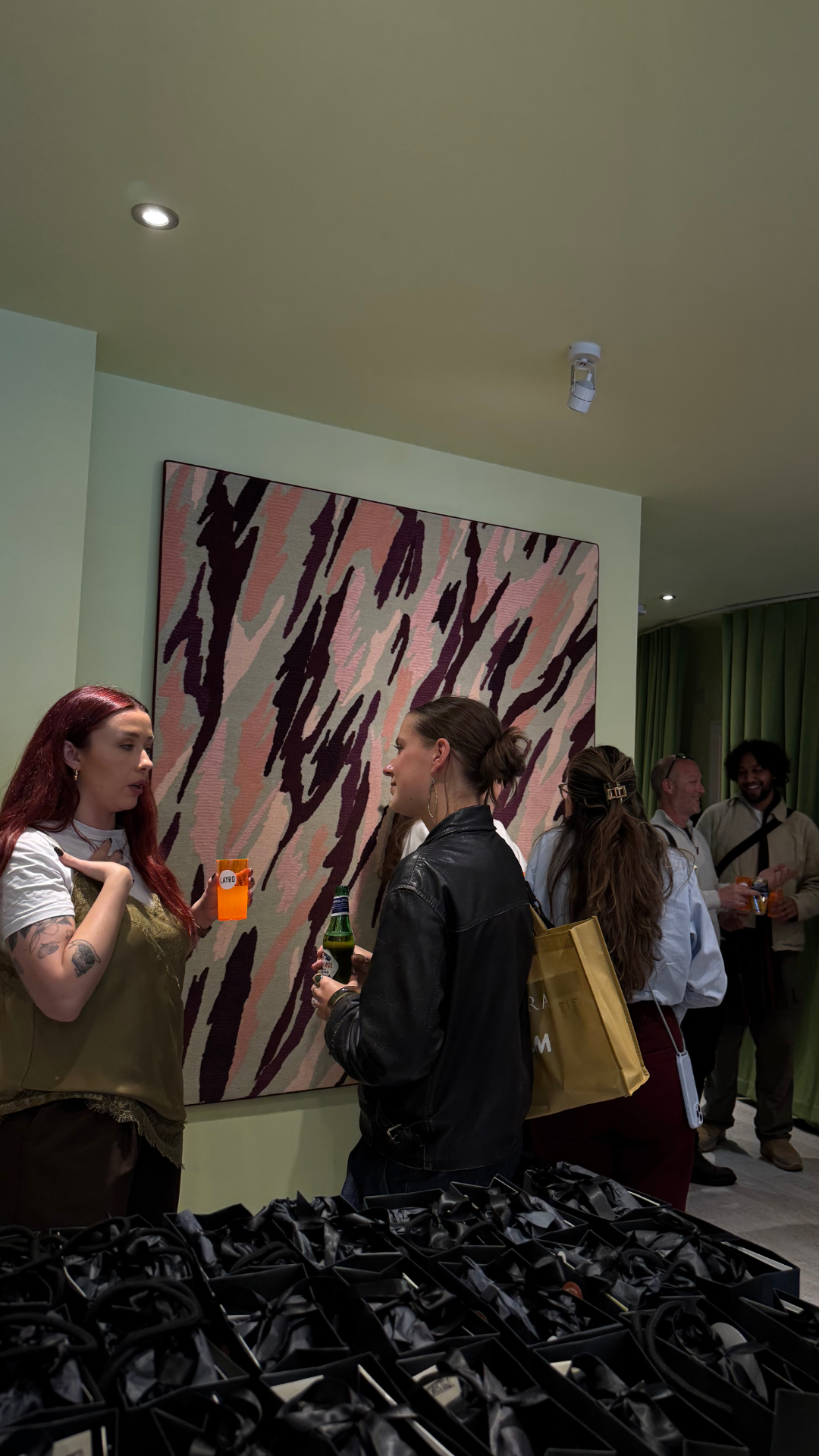
The discussion that followed the talk was just as engaging. The audience Q&A opened up conversations around emotional longevity in design, sensory experience, workplace culture, art, ergonomics and whether there can ever really be a “universal” space that works for everyone.
One audience member asked how organisations balance personal identity with collective culture in workplaces; a conversation that led to a memorable reflection:
“Being part of a community requires sacrifices… but spaces can still create opportunities for individual creativity and personality.”
That tension between self-expression and shared identity is something we think modern spaces need to navigate far more thoughtfully.