What Formula 1 Can Teach Football About Creating Premium Experiences
.jpg)
For decades, football clubs have competed on the pitch.
Formula 1 teams compete everywhere.
From the moment a guest arrives at a Grand Prix, every interaction has been considered. Hospitality, branding, technology, food, service, exclusivity and storytelling all work together to create an experience that feels premium before a wheel has even turned.
Football has made huge strides in hospitality over the last decade, but there is still enormous potential to learn from a sport that has built one of the world's most desirable live-event experiences.
As designers working across sports environments, we believe the future of stadiums isn't simply about adding more hospitality seats.
It's about designing experiences that people are willing to pay a premium for.
Football's biggest opportunity isn't more seats.
It's creating better experiences.
Many clubs are investing hundreds of millions into new stands and stadium redevelopments.
The danger is thinking that additional capacity automatically creates additional revenue.
It doesn't.
Better experiences create additional revenue.
Fans today have more choice than ever. If they're paying for premium hospitality, they expect something comparable to luxury hotels, private members' clubs and high-end restaurants, not simply a better view of the pitch.
Formula 1 understands this exceptionally well.
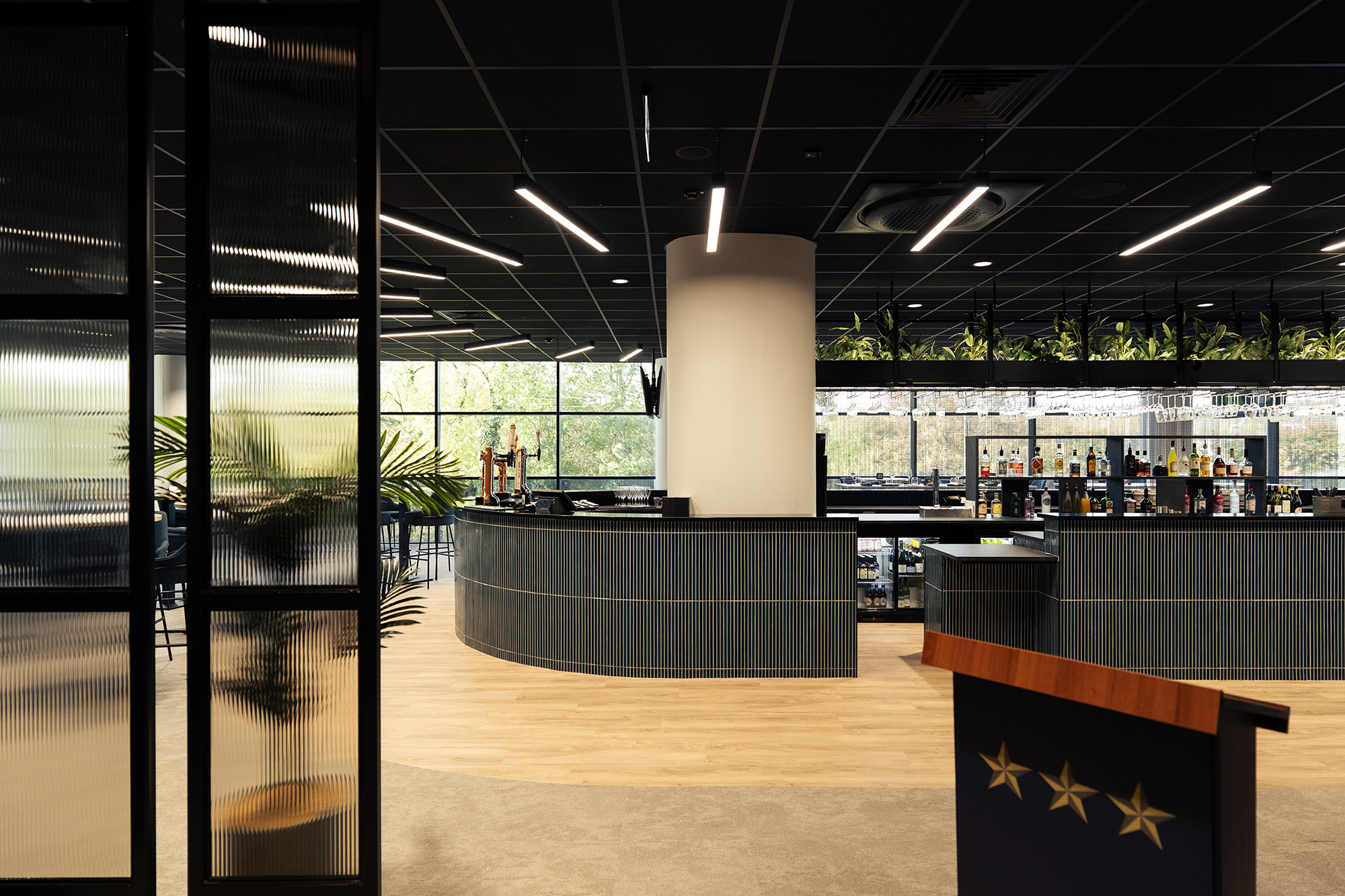
Lesson One: Every Guest Should Feel Like a VIP
Formula 1 treats hospitality as the headline act.
Whether you're in the Paddock Club or a team suite, the experience begins long before the race.
Dedicated arrivals.
Personal greetings.
Premium lounges.
Curated food.
Private viewing terraces.
Behind-the-scenes access.
Football often focuses almost exclusively on the 90 minutes.
Formula 1 focuses on the entire day.
The best hospitality isn't about the match.
It's about how people feel before, during and after it.
Lesson Two: Hospitality Should Tell a Story
Walk into a Formula 1 hospitality suite and you immediately know whose space you're in.
The design reflects the team's identity.
Materials.
Technology.
Graphics.
Cars.
History.
Innovation.
Everything reinforces the brand.
Too many football hospitality spaces could belong to any club.
Great interiors should feel unmistakably connected to the club's history, city and identity.
Supporters don't just buy hospitality.
They buy belonging.
Lesson Three: Design Drives Commercial Value
Design is often viewed as a cost.
In reality, it's one of the strongest commercial investments a venue can make.
A better-designed premium lounge can:
- Increase average guest spend
- Improve hospitality renewals
- Attract new corporate partners
- Command higher ticket prices
- Increase event bookings
- Strengthen sponsorship opportunities
Formula 1 doesn't see hospitality as an add-on.
It's a business.
Football increasingly needs to do the same.
Lesson Four: Premium Doesn't Mean Gold and Marble
The best Formula 1 spaces aren't necessarily the most expensive.
They're carefully curated.
Comfortable furniture.
Exceptional lighting.
Great acoustics.
Thoughtful layouts.
Outstanding service.
Luxury comes from attention to detail.
Not simply expensive finishes.
That same philosophy should apply to stadium hospitality.
Lesson Five: Create Reasons to Stay Longer
A Formula 1 guest often spends ten or twelve hours at a circuit.
Football supporters typically arrive just before kick-off and leave shortly after full-time.
Imagine if clubs gave people reasons to spend an extra three hours on site.
Breakfast clubs.
Business networking.
Recovery facilities.
Interactive experiences.
Museums.
Children's activities.
Live music.
Premium restaurants.
Post-match entertainment.
The future stadium isn't a venue.
It's a destination.
Lesson Six: Premium Experiences Create Better Sponsors
Sponsors increasingly want engagement rather than logos.
Formula 1 has mastered this.
Partners activate products.
Host clients.
Launch campaigns.
Network.
Entertain.
The hospitality environment becomes part of the sponsorship itself.
Football clubs should design hospitality with
sponsors in mind from the outset.
Not as an afterthought.
Lesson Seven: Technology Should Feel Invisible
Formula 1 integrates technology seamlessly.
Digital check-in.
Personalised experiences.
Interactive displays.
Live data.
Mobile ordering.
Technology should remove friction rather than become the attraction.
The best stadium technology is the technology guests barely notice.

What This Means for Football
The next generation of stadiums won't compete on capacity alone.
They'll compete on experience.
The clubs that invest in premium environments today will be the ones attracting new sponsors, increasing hospitality revenue, improving fan loyalty and creating destinations that thrive every day of the year, not just on matchday.
Football has the emotion.
Formula 1 has the blueprint for premium experiences.
The future lies somewhere in between.
Closing
At Layrd, we believe stadiums should be designed around people, not just sport.
Our work combines hospitality, commercial strategy and interior design to create environments that generate revenue, strengthen brands and leave lasting impressions on every guest.
Because in modern sport, the experience begins long before kick-off, and long after the final whistle.